
A session plan, built from the game's own numbers
Bet size, sticky symbols, the bonus round, the gamble and the moment to close the tab.
The honest starting point: the outcome of a round cannot be influenced. No sequence of spins, no timing trick and no bet pattern changes what the reels produce. What you do decide is the bet, the pace and when to walk away, and in 3 Golden Chests those three choices have unusually clear numbers behind them.
Bet size and session length#
Since every prize in this game is a multiplier of the total bet, the ceiling scales with you and so does the cost of every spin. Picking a stake is the one calculation to do properly before you start.
| At a total bet of | A 10x BONUS symbol | MIN at 20x | ULTRA at 1,000x | The 1,400x ceiling |
|---|---|---|---|---|
| 0.1 | 1 | 2 | 100 | 140 |
| 100 | 1,000 | 2,000 | 100,000 | 140,000 |
The rail itself belongs to the casino: some lobbies open the game at 0.01 and others reach 250, and the panel in the game shows your exact steps. Both columns above play exactly the same game, with the same 96.04% return, the same High volatility rating and the same four fixed tiers.
The same arithmetic decides how long a budget lasts, and that is the part worth doing before the first spin rather than after the tenth.
| A session budget of | At a 0.1 stake | At a 1 stake | At a 10 stake |
|---|---|---|---|
| 20 | 200 rounds | 20 rounds | 2 rounds |
| 100 | 1,000 rounds | 100 rounds | 10 rounds |
Those round counts are the only thing your stake choice really buys, since the trigger condition, the 3 attempts and the four tiers are identical in every column. A budget spread over more rounds meets the centre row more often; the same budget at a large step meets it less often but prices every tier higher. Neither version is cleverer than the other, and picking between them honestly is the whole of what “strategy” can mean in a game like this one.
Session length is the other half of the plan, and the figure that shapes it is the 2.78% hit frequency, about one spin in 36. This game pays in concentrated settles rather than in a steady trickle, because prizes sit printed on the symbols and are cashed inside the Bonus Game. A plan built around “I will play until I win something” fits that badly. A plan built around a number of rounds at a stake you are comfortable with fits it well.
A useful way to frame it: decide the size of the session first, divide it by the stake you want, and you have your round count. If that count feels too small to be entertaining, the answer is a smaller stake rather than a longer wait.
Reading the STICKY symbols#
They stay put, as long as you leave the rail alone. STICKY symbols are the one place in this game where a decision of yours visibly changes what is on screen, which makes them worth understanding properly.
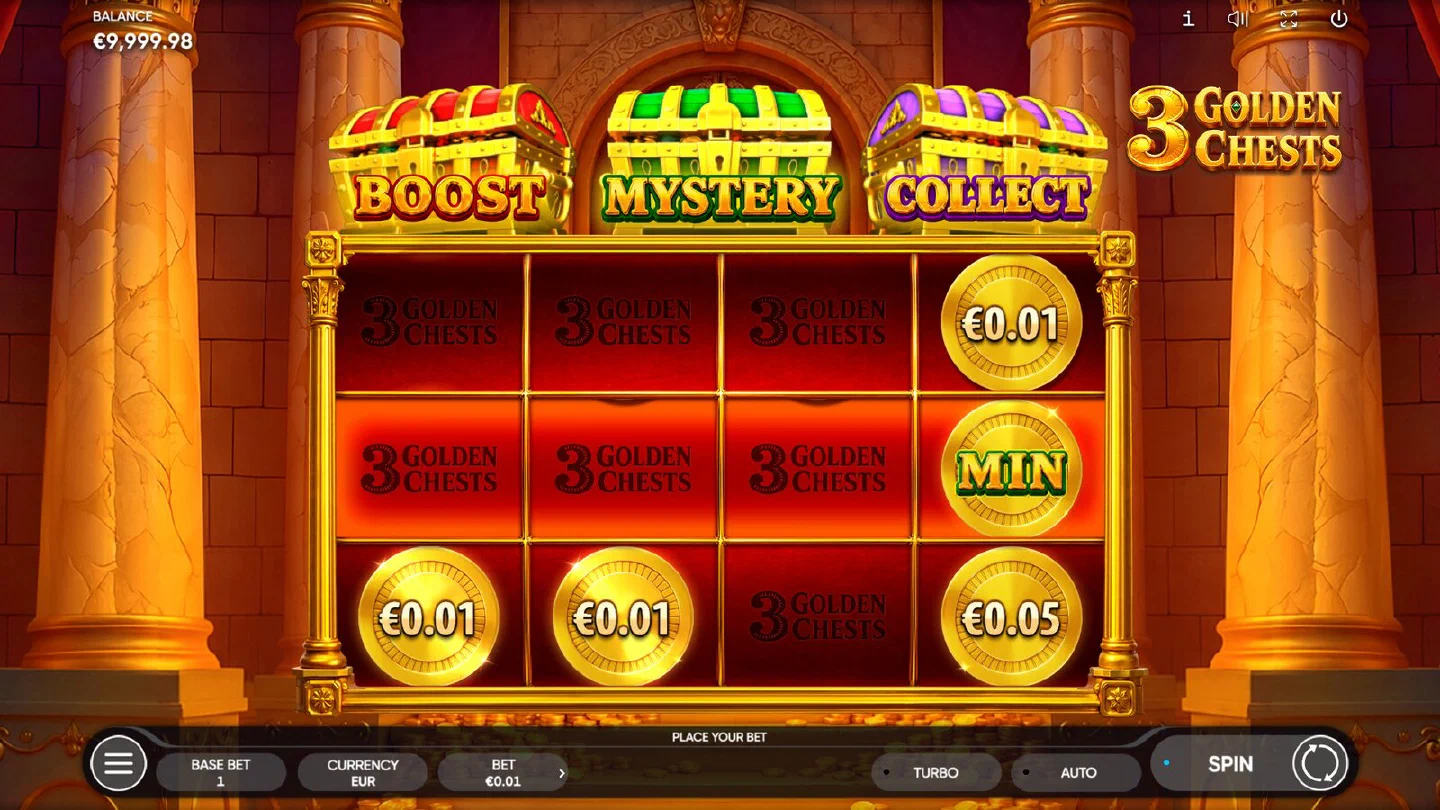
A STICKY symbol lands in the main game carrying 5x to 10x the total bet and locks into its position on the grid. It holds there while the total bet stays unchanged. Move the bet selector and it stops sticking: on the next spin it leaves the grid, taking its multiplier with it.
That gives you a simple rule with no guesswork attached. Set your stake at the start of a session and leave it there. If you want to change stakes, do it when the grid is clear rather than when a symbol is parked on it. And if you find yourself wanting to raise the bet because the last few rounds were quiet, note that the game is not owed anything by those rounds; the only thing a higher stake changes is the size of both outcomes.
Worth adding for balance: STICKY symbols are a main-game feature, so they are not part of the Bonus Game arithmetic. Their job is to hold value on the board while you wait for the centre row to fill. The features page has the full symbol set and what each one carries.
The bonus round and what you can plan for#
Three attempts, twelve positions, one sum at the end. The Bonus Game is random in its arrival and in its composition, but its shape is published in advance, down to the multiplier each special symbol can carry.
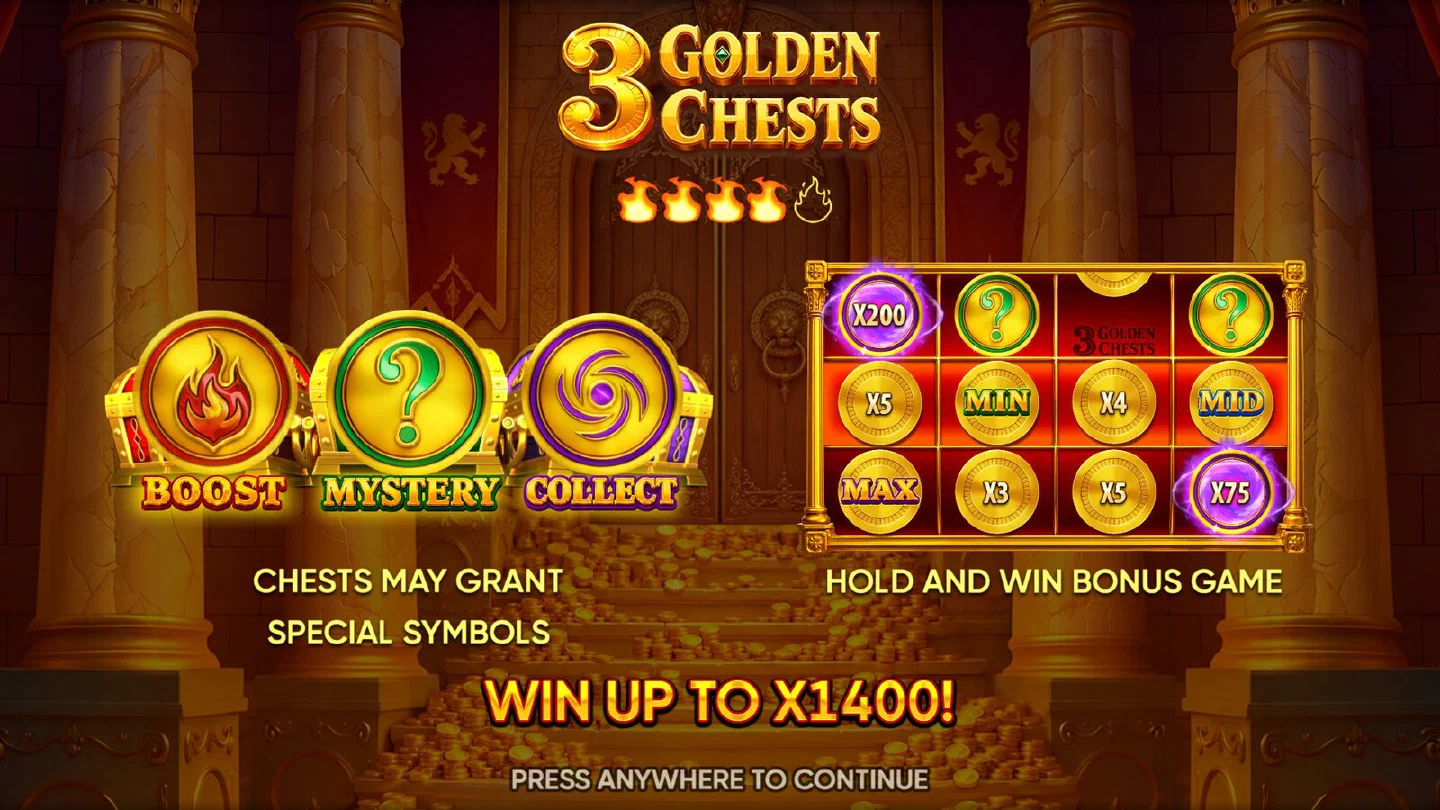
What you know before it starts: the trigger is four regular symbols in the centre row, earned on the reels rather than bought, so it costs one spin at your own stake. The round gives 3 attempts, the counter returns to the top with every new symbol, and it closes when the attempts run out or all 12 positions are covered. The tiers are fixed multipliers of the total bet: ULTRA at 1,000x for a completed board, then MAX at 100x, MID at 50x and MIN at 20x.
What stays random: which of the three chests light up. Activation is independent of the symbols that opened the round, so none, one, two or all three may join, and that is the main source of variation between rounds.
The planning consequence is small but real. Because the entry is earned rather than purchased, a smaller stake gives you more triggers for the same budget without changing the odds of any single one. That is the whole of the maths, and it points the same way as the bet-size advice above. The how to play page walks through the round spin by spin.
What “tips” and “cheats” can honestly mean here#
If you came here for a trick, the useful answer is a redirection rather than a lecture. The reels are driven by a generator that owes nothing to the previous round, which means every spin starts from the same clean slate whatever came before it. Anything sold as a pattern, a warm machine or a best time of day is selling you the idea rather than a result.
What does exist is a short list of genuinely correct plays, all of them drawn from the rules of this specific game.
- Leave the bet alone while a STICKY symbol is on the grid. This is the one case where a button of yours removes value from the screen.
- Match your stake to the 2.78% hit frequency. A stake that survives quiet stretches keeps you in the game for the settle; one that does not, will not.
- Read the dealer’s card before gambling. 162% against a 2 and 42% against an ace describe two completely different offers.
- Use the demo to learn the round. A free session teaches the counter and the chest combinations without costing a stake. The demo page opens a fresh one in a tap.
- Set a limit before the first spin. It is the one decision that stays available to you for the whole session.
Add one more habit if you play long sessions: write down the stake you chose and the round count you intended, then check both halfway through. A plan you can see is far easier to keep than one you are holding in your head while the reels are moving.
None of these change the odds of a round. All of them change how much of your session you spend in a position you chose on purpose.
Risk Game: the dealer’s card decides#
84% on average, and the average hides its extremes. After a paid round you can gamble it: pick one of four face-down cards against the dealer’s, a win doubles the payout, up to ten attempts deep. The Joker beats every card and never lands on the dealer’s side. An equal card is a draw and the attempt is replayed. TAKE WIN ends it at any point.
The published return by dealer card is the most useful table on this page.
| Dealer’s card | Return | Dealer’s card | Return |
|---|---|---|---|
| 2 | 162% | 9 | 92% |
| 3 | 121% | 10 | 78% |
| 4 | 113% | J | 69% |
| 5 | 101% | Q | 66% |
| 6 | 100% | K | 64% |
| 7 | 100% | A | 42% |
| 8 | 100% |
Read it as a simple rule of thumb: low cards are where the feature is friendly, the middle is roughly even, and from a 9 upwards it turns against you sharply, reaching 42% against an ace. Card probabilities are not uniform, so the table describes the shape of the offer rather than a formula to follow.
The other thing the average tells you is what repeated use does to a session.
Every attempt blends the feature’s 84% into the game’s own 96.04%, so the more
often you gamble, the more of your play sits inside the lower figure. Using it
sparingly, or leaving it alone, keeps you on the higher one. Pressing TAKE WIN
is a normal move rather than a lack of nerve.
Stopping on time#
The most valuable button in any slot is the one that closes the game. AUTO and TURBO both sit on the bottom bar, and together they make rounds go by quickly, which is exactly why a session length decided in advance is worth more here than a mental note made halfway through.
Three practical habits cover most of it. Set a deposit or session limit using the casino’s own tools before the first spin, not after a disappointing round. Keep one stake for the whole session, both because it suits STICKY symbols and because it makes your round count predictable. And treat a good result as a reason to stop rather than as evidence that the game is running warm; the reels have no memory of it.
One feature makes stopping easier than usual. An unfinished round is kept for 7 days on your account, so leaving mid-bonus costs you nothing. You can close the tab, come back later and finish the round exactly where it stood.
For the tools themselves, including deposit limits, time-outs and self-exclusion, see our responsible gambling page . For the numbers behind every figure quoted here, the RTP page has the full breakdown, and the slot hub has the whole game in two screens whenever you want the short version.